The AI industry spent a fortune on Super Bowl ads to make adoption feel inevitable. Five months later, a hundred-plus cities protested data centers anyway.
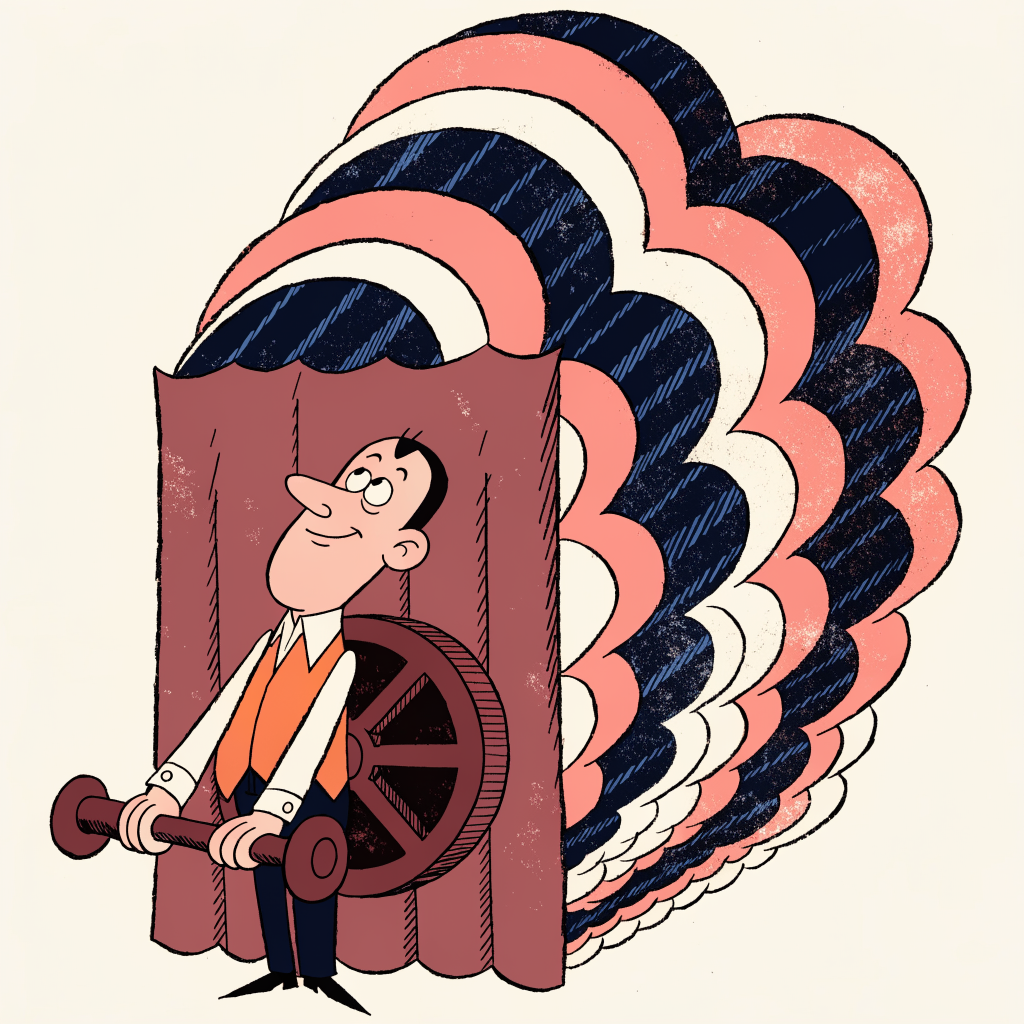
AI companies ran roughly 15 national ad spots during Super Bowl LX on February 8, 2026, in what critics called an attempt to buy public acceptance of a technology polls show people distrust. Journalist Karen Hao, researcher Rumman Chowdhury, and other tech-accountability voices argued the industry sells a feeling that AI adoption is inevitable so opposition never forms. Michigan state Rep. Dylan Wegela made the same argument at a June 23 data-center moratorium rally, and musician Mike Sabath echoed it in a July 20 Rolling Stone piece on the artist backlash. Public Citizen's July 8 report separately found data-center developers locking local officials behind NDAs before residents could weigh in.
The receipts on the sales pitch are solid: roughly 15 Super Bowl ads for a product category most people distrust, plus Public Citizen finding an 80 percent NDA rate among Virginia localities with data centers, signed before residents got a say. That part is documented, not inferred.
Where it gets shakier is whether the pitch works as a silencing strategy. The record shows the opposite: the ads landed badly, and by July 18 more than a hundred locations saw organized data-center protests, much of it from the political right rather than from the people making this argument. Our score: mixed evidence.
Three of the four checks could be settled: two held up, one didn't. The fourth asked for a confession, which a quiet strategy would never produce, so we left it open instead of counting it.
1 more couldn't be settled either way, so it's out of both lines rather than counted as a failure.
Being right about what happened and wrong about what it proves are different failures, so these two lines never get averaged into one score. How this works
The logic check
If the claim is right, these things should be true. Here's what we found. Each check says which version of the claim it's testing: the plain one most people would hear, or the widest one the same words could carry.
Industry messaging should present AI adoption at scale as settled and treat doubters dismissively.
Holds trueRoughly 15 Super Bowl LX spots came from AI companies, and Slate described the blitz in its own voice as designed to get the public excited about AI at a moment of deep skepticism.
Rollout processes should foreclose public input before communities can weigh in.
Holds truePublic Citizen's July 8 report found developers locking local officials behind NDAs, an 80 percent NDA rate among Virginia localities with data centers, and deals concealed until, in the report's words, it is often too late to meaningfully engage.
If the strategy works as intended, opposition should visibly demobilize after the messaging waves.
FalseThe opposite happened: the Super Bowl ads drew sharply negative reception, and by July 18 organizers reported a national day of action against data centers spanning well over a hundred locations, much of it organized from the political right rather than by the carriers of this frame.
There should be first-party admissions that the messaging is aimed at preempting opposition rather than ordinary marketing.
Can't be checkedNo first-party admission turned up, and industry figures defended the ads in ordinary marketing terms. But a strategy meant to be quiet would not produce an admission even if it were real, so silence here cannot tell the two apart. We are leaving this one open rather than counting it against the claim.
Left out of the grade. We couldn't settle this either way, and treating it as a failed check would say more than we know.
The receipts
Every quote, checked against its source.
Karen Hao (journalist, author of Empire of AI)
"this infrastructure is actually not technically necessary, and … somehow the companies have effectively convinced the public and governments that it is."
Rumman Chowdhury (CEO, Humane Intelligence; former U.S. Science Envoy for AI)
"another era, where people still believed the shtick that these guys were going to usher in immense social and technological and economic change"
Suresh Venkatasubramanian (Director, Center for Tech Responsibility, Brown University)
"Here is a future we can imagine for you... And saying 'Don't worry about all these other boring issues the naysayers will talk about.'"
Michigan state Rep. Dylan Wegela (D-Garden City)
"We are being driven into this future of AI, and I don't think that everybody believes it is as inevitable as people are telling us."
Mike Sabath (producer-songwriter)
"The greatest tool that the big money folks use is instilling the feeling of fear and that we can't stop it."
The full scoring
The raw numbers behind the verdict. What R/I/P/E/L and charge stages mean: how we score.
Research verdict: mixed evidence. This is the category the underlying research assigned before we graded the individual checks, and it came back the same on every card in this set.
Recurring carriage in Rolling Stone, Slate, Democracy Now, and The Intercept plus one state official supports R3 rather than saturation. Motive attribution and bad-faith default run as the standing lens without essentialization or purity policing, so I3. The frame appears independently across academic, journalistic, legislative, creative, and street-protest wings, including as literal protest signage, supporting P4. Elite adoption sits at partisan media, mid-tier influencers, and one state legislator, so E3. The opposing camp answers with its own manufactured-opposition frame without a documented citation lock, so L3.
Mirrors: The opposing camp runs a real counter-frame about the same fights that reads the opposition, rather than acceptance, as the manufactured thing, from pro-project Rep. Joey Andrews attributing grassroots resistance to a wall of false information on social media to the broader astroturf-psyop card, but we did not find the two frames citing each other as primary evidence, so we code answered rather than locked.
Keeps coming back:
- Super Bowl LX AI ad blitz (February 2026)
- Michigan data-center moratorium fight and Capitol rally (June 2026)
- Doja Cat AI-songs reveal and artist backlash (June to July 2026)
- San Francisco anti-AI marches and the July 18 national day of action (July 2026)
Source record: counter-hate-monitor/counter-hate-work/special-reports/2026-tech-ai-fault-line/cards.json#pol-manufactured-inevitability
The AI fault line, January to July 2026
Thirteen narratives, every carrier quote, the full scoring, and the coverage notes on what we couldn't verify. This page is the plain-language cut; that one is the whole thing, including the polarization methodology that defines every score here.